Introduction
Whenever we get to election time, it never fails, I have so many people come up to me and ask me: “Father, who am I supposed to vote for this time?” – or – “Father, how am I supposed to properly discern voting this year?” That’s not a bad thing! It is the responsibility of every single Catholic to participate in the political life of their country. It’s not a suggestion…it’s a moral obligation. But, sometimes, it is difficult to know how to decide what candidates to support or what issues are the most important to either support or oppose. So tonight, we’re going to dive a little bit deeper into things in terms of this intersection between faith and politics – how we are called to use our faith to help us decide what is important in the political sphere.
Catholics Are Called to Participate in Political Life
I want to start with a quote from the Catechism of the Catholic Church (1915). It says:
As far as possible citizens should take an active part in public life. The manner of this participation may vary from one country or culture to another. “One must pay tribute to those nations whose systems permit the largest possible number of citizens to take part in public life in a climate of genuine freedom” (GS, 31§3).
The Church is affirming that the lay faithful are called to engage the culture, to participate in the social structures and organizations that are in within our own countries – especially in those countries where some form of democracy is present and people are invited to take part in elections and other political activities. Those are things that allow the human person to embrace genuine freedom, to have some form of dominion and authority over their own lives.
So, not only is this something that the Catechism tells us is important, but it pulls in other parts of the tradition of the Church to affirm this point. And we see that same sentiment over and over again throughout the centuries.
In 1891, Pope Leo XIII released his encyclical, Rerum Novarum, in which he was specifically mentioning how important it is for Catholics to take part in the social life of their countries to improve the conditions of families, workers, and other members of society. He reminds us that we are called to keep the Gospel at the center of that endeavor, to infuse a spirit of equity, to instill a sense of self restraint, to foster moderation and harmony among the different individuals within the political space (RN 55).
Other times the popes and the Church has spoken out about politics and the role of Catholics in the social/political life of their countries is extensive. I want to offer just a few examples of where we see that:
- Benignitas et humanitas (Goodness and Kindness) from Pope Pius XII in 1944 – talks about the role of citizens and government in democracy and their duties to the world at large
- Pacem in terris (Peace on Earth) from Pope John XXIII in 1963 – highlights that “man’s personal dignity involves his right to take an active part in public life, and to make his own contribution to the common welfare of his fellow citizens.” (26)
- Dignitatis humanae (Of the Dignity of the Human Person) from Paul VI in 1965 – speaks about the fundamental right of all individuals, families, and religious communities to freedom of religion and affirms the duty of the civil authorities to protect those rights.
- The dogmatic constitution on the Church Lumen Gentium, and the pastoral constitution on the Church Gaudium et Spes – both talk about the role of Catholics in the political sphere at length…and we see them quoted often in the documents of the Church since Vatican II
- John Paul II, Benedict XVI, and Francis have all talked about the importance of Catholics participating in the political sphere in multiple documents, letters, encyclicals.
Promotion of the Common Good
When Pope Benedict was the Prefect of the Congregation for the Doctrine of the Faith (now known as the Dicastery for the Doctrine of the Faith), he wrote a Doctrinal Note titled The Participation of Catholics in Political Life. Together with Faithful Citizenship from the United States Conference of Catholic Bishops (USCCB), this would be a good document to read in preparation for our upcoming elections.
But there is something that Ratzinger says in that Note that is really important for us to consider. He writes:
By fulfilling their civic duties, “guided by a Christian conscience” (GS 76), in conformity with its values, the lay faithful exercise their proper task of infusing the temporal order with Christian values, all the while respecting the nature and rightful autonomy of that order (GS 36), and cooperating with other citizens according to their particular competence and responsibility (LG 36; GS 31 & 43). The consequence of this fundamental teaching of the Second Vatican Council is that “the lay faithful are never to relinquish their participation in ‘public life’, that is, in the many different economic, social, legislative, administrative and cultural areas, which are intended to promote organically and institutionally the common good” (CL 42).
Let’s dissect that a bit.
First: participating in the political life of the country must be guided by a Christian conscience. What does that mean? It means that we have an obligation to know what the Church teaches and why. We have to read the Catechism and other documents of the Church to grow our understanding. We have to pray with our decisions in the voting booth; we have to ask the Lord for guidance on those important issues.
Second: we are called to bring those Christian values into the world. We are called to advocate for policies and legislation that will advance the common good. We have to be guided by our faith and to attempt to instill those values within the world, to advocate for them in the candidates we support, in how we voice our support or opposition on issues. We are not called to be silent.
Third: we are not islands; we are not alone in this world; we are members of a society, a family, a city, a country. There are other people in the world besides us who have different opinions than we do, different belief systems. Because of that, we have to respect others. Not everyone is in the same place with their faith or with their knowledge of social issues. So we have to be cordial in our discussions with one another.
Fourth: we must be competent. We have a responsibility to understand the central issues of our day and to vote with that knowledge. This kind of goes along with having a well-formed conscience, but we have a responsibility to know where candidates stand on issues; we have an obligation of knowing the possible outcomes for voting on issues, constitutional amendments, etc. So, we have to work to understand the language that is on the ballot, especially in those amendments and charters, so that we can vote the correct way.
Fifth: we must never relinquish this participation in the public life. In other words, if something is threatening to take that right away, we are called to oppose it. We are called to preserve this right at all costs.
Finally: we must promote the common good. That means that we must do our best to ensure that our politicians, our government leaders, our social structures and organizations are working together to improve the wellbeing of people in our society and in the wider world. Meaning, working to establish peace, to ensure that every human person has their basic necessities (the first of which is life, by the way), that others can enjoy prosperity, happiness, liberty. In other words, “the rights of the individual to personal possessions and community resources must be balanced with the needs of the disadvantaged and dispossessed.”[1] So we have to take care of our brothers and sisters who are less fortunate…we have to take care of the vulnerable. It’s a non-negotiable.
Forming Consciences for Faithful Citizenship
With that, I want to move a little bit closer to home and talk about the document from the USCCB, the US Bishops, on Forming Consciences for Faithful Citizenship. That is quite a long title, so I’ll refer to it only as Faithful Citizenship from here on out.
History of the Document
Faithful Citizenship was first proposed by the USCCB in 2007 in preparation for the 2008 election cycle. I think the bishops were noticing how quickly the US was embracing a lot of secular valued and moving rapidly away from Gospel truths in the social/political side of things. In response, they released this document to help teach Catholics in the US about their responsibilities when it comes to elections, voting, political activism, and participating in the political process as a whole. And it gets updated about a year prior to a new election cycle…so it was actually just updated with new content, adding quotes from Pope Francis and other recent Church documents within the last 6 months.
What is Not in Faithful Citizenship
Now, what you will not find in Faithful Citizenship is an endorsement of specific parties or candidates. From a legal standpoint, the Church cannot endorse specific candidates or political parties because doing so would jeopardize our ability to take care of the poor and provide services to those less fortunate. How so? If we speak out in favor of political candidates, here in the United States, that would jeopardize our status as a tax-free, nonprofit organization and hinder the ability to serve our communities.
And also, it risks alienating certain people within the community as well. Just think about our society right now, how divided we are and how much hate and discord there is amongst various groups of people. We don’t want an endorsement of a political candidate to stop someone from coming to one of our parishes or one of our social outreach organizations…a place where they could experience the love of Christ and be led to a moment of conversion and transformation. Let’s get people in the door first, then we can change their hearts.
What Faithful Citizenship does say
With that in mind, that does not mean that the Church cannot or should not call out certain politicians for the different policies that they espouse and to advocate for Gospel values in policies instead. In fact, it is absolutely the role of the Church to do that – for candidates of all political parties. And the Church has done that and will continue to do so. As we have seen in the various documents that I mentioned earlier, the Church absolutely has the right and the responsibility to speak the Truth, to have its voice heard in the political sphere. We will not shy away from that…ever. That is what Faithful Citizenship does…it “offers a moral framework for Catholics to examine issues and prepare to vote.”[2] In fact, the document itself says that it “reflects the perennial role of the Church in public life in proclaiming timeless principles: the infinite worth and dignity of every human life, the common good, solidarity, and subsidiarity” (Introductory Note).
Upcoming Revision
Side note: there will be an extensive rewrite of Faithful Citizenship after the 2024 election. At their last meeting in November, the US Bishops recognized that the document isn’t as up to date as they would like it to be and that there are several issues that need to be addressed that are not currently in the document. They also want to simplify it a bit and make it easier for people to digest and make it more accessible. Because outside of priests, religious, and those in Catholic education…not many people have actually read the document. The Bishops would like to change that.
Our Duties as American Catholics
One of the first things the bishops call to mind is the great gift and the blessing that we enjoy being citizens of the United States where democratic values are the bedrock of our country’s political system. But because of that, we have an increased responsibility to participate in that system.
The document also calls to mind the issues that we face as a country, issues that are both political and moral. That makes it even more important for us to participate in public life, to advance the mission of the Lord. Advancing that mission means promoting the right to life…first and foremost for the unborn, but also for the terminally ill, the elderly; it also means promoting that right for prisoners. It means we are called to be peacemakers, a country that pursues justice and freedom for all, a country that seeks to build a safer world, that defends others from the violence of terrorism. We are a people with immense diversity, which is why we have the need to respect immigrants both undocumented and documented, those here legally or illegally. Our society is “built on the strength of our families,” which means that we are “called to defend marriage and offer moral and economic supports for family life” (FC 2). We are called to combat against poverty, to work to establish adequate health care services and to be good stewards of the environment.
Catholic Social Doctrine
All of these things though have to be guided by the principles of the Church, the teachings of the Church; by natural law; by God’s law. Our consciences have to be formed properly. The document “highlights the role of the Church in the formation of conscience and the corresponding moral responsibility of each Catholic to hear, receive, and act upon the Church’s teaching in the lifelong task of forming his or her own conscience. Foremost among those teachings are the four basic principles of Catholic social doctrine: the dignity of the human person, the common good, subsidiarity, and solidarity” (Compendium of the Social Doctrine of the Church, no. 160).
The Dignity of the Human Person
Human life is sacred. The dignity of the human person is the foundation of a moral vision for society. Direct attacks on innocent persons are never morally acceptable, at any stage or in any condition. (FC 44)
The Church will always stand in opposition to any assault against the dignity of the human person, any threat that advocates for the destruction of human life. And it is the moral responsibility of all Catholics to do the same. What are some of those threats here in the US?
Abortion
Often, abortion is mischaracterized as women’s health or reproductive health. That’s simply not the case. Let’s call it what it is, the intentional taking of a human life. The Bishops have called abortion the “preeminent issue of our time,” even despite the overturning of Roe v. Wade and Planned Parenthood of Southeastern Pa. v. Casey. Now the battle against abortion has only gotten more important because it’s happening on the state levels and it’s being put up for a vote. So, we have to really work to change hearts but also to advocate for what we believe as Catholics. Our voices have to be heard now more than ever before.
Abortion Amendment
On that issue, I want to mention the amendment here in Florida. Hopefully you have heard your priests address the abortion issue, specifically to bring attention to the stance of the Church on that issue in preparation for voting on this amendment in November. The Church has been clear on this issue from the beginning…and that will never change. But in a particular way, I want to address the major concerns with the amendment that the Bishops and other pro-life organizations have voiced.
The amendment seeks to legalize abortion through the third trimester, which is “the last phase of pregnancy. It lasts from weeks 29 to 40, or months 7, 8, and 9. During this trimester, the baby grows, develops, and starts to change position to get ready for birth.”[3]
It is cleverly worded in order to hide the fact that it would eliminate current laws and common-sense safety regulations for abortions that most people on both sides of this issue support.
The amendment explicitly allows abortion until the preborn child is viable, which is at about 22-24 weeks, or 6 months, of pregnancy.
The text of the amendment does not define key terms like “government interference,” “viability,” “patient’s health” and “health care provider.” Without these definitions, the amendment, if passed, will cause countless lawsuits and years of legal uncertainty that will cost the taxpayers of Florida literally millions of dollars.
So what does the text of the amendment say:
“No law shall prohibit, penalize, delay, or restrict abortion before viability or when necessary to protect the patient’s health, as determined by the patient’s healthcare provider.”
That’s it! That’s the amendment. Other constitutional amendments are usually PAGES LONG (!) and provide detailed definitions for terms, implementation guidelines, etc. This provides none of that. So we see how dangerous this can potentially be for babies in the State of Florida and that’s why we, as Catholics, must not support it.
Other Life Issues
Getting back to the document, other life issues it addresses includes…
- Euthanasia, Assisted Suicide – falsely labeled as “death with dignity”
- Human cloning
- In vitro fertilization (IVF)
- The Church will always be against IVF. Why? The more important question should be, do we believe that life begins at conception? When a sperm and egg are paired together, that is when conception happens. With IVF, the conception of children is removed from the marital act (which is one reason why this a sin) and that conception happens in a petri dish. Those now fertilized eggs, those newly conceived children are typically frozen until implantation. But here’s the thing, when a couple no longer wants to have any more children, what happens to those fertilized eggs? They are either discarded or they’re kept in freezers. So, it results in the destruction of human embryos, it ends the life of that child.
- Destruction of human embryos for research
- Death penalty – this isn’t touched upon with any length in Faithful Citizenship, but I imagine that is one of the things that will be changing in the next edition. Because Pope Francis recently approved a change in the Catechism with regards to the death penalty
- Recourse to the death penalty on the part of legitimate authority, following a fair trial, was long considered an appropriate response to the gravity of certain crimes and an acceptable, albeit extreme, means of safeguarding the common good.
Today, however, there is an increasing awareness that the dignity of the person is not lost even after the commission of very serious crimes. In addition, a new understanding has emerged of the significance of penal sanctions imposed by the state. Lastly, more effective systems of detention have been developed, which ensure the due protection of citizens but, at the same time, do not definitively deprive the guilty of the possibility of redemption.
Consequently, the Church teaches, in the light of the Gospel, that “the death penalty is inadmissible because it is an attack on the inviolability and dignity of the person,” and she works with determination for its abolition worldwide. (CCC 2267)
- Recourse to the death penalty on the part of legitimate authority, following a fair trial, was long considered an appropriate response to the gravity of certain crimes and an acceptable, albeit extreme, means of safeguarding the common good.
Other threats to human dignity that we need to be vocal about: racism, immigration, torture, unjust war, genocide, poverty, famine, starvation. I also believe that the Bishops in their next edition of this document should include more about gun violence and human trafficking as well, because those are things that are very much life issues.
The Common Good
I know I mentioned this already briefly, but let’s take a deeper look at the Catholic understanding of the Common Good.
The common good indicates “the sum total of social conditions which allow people, either as groups or as individuals, to reach their fulfillment more fully and more easily” (GS 26). … The common good, in fact, can be understood as the social and community dimension of the moral good. (Compendium of the Social Doctrine of the Church 164).
Every Catholic is called to foster the common good in everything that we do. It means ensuring that human rights are protected and basic responsibilities toward others are being met in our homes, the workplace, within social organizations, and within government. Those rights include: the right to life, food, shelter, education, employment, health care, housing, freedom of religion, family life. It also means respecting and defending the dignity of work, protecting the rights of workers – including decent wages, the right to organize and join unions. It also means defending the right to private property.
What was recently added to this list is the duty of all Catholics to care for God’s creation. “Care for creation is a duty of our faith and a sign of our concern for all people, especially the poor, who ‘both everyday experience and scientific research show’ suffer ‘the gravest effects of all attacks on the environment” (Laudato si’ 48). Taking care of the environment though is not just about climate change; it also means curbing pollution, making sure people have access to clean drinking water, conserving land, combatting against the loss of biodiversity, among other things.
Subsidiarity
The principle of subsidiarity reminds us that larger institutions in society should not overwhelm or interfere with smaller or local institutions, yet larger institutions have essential responsibilities when the more local institutions cannot adequately protect human dignity, meet human needs, and advance the common good (Centesimus annus 48; Dignitatis humanae 4-6). (FC 48)
Basically, subsidiarity states that decisions are best made at the lowest level possible…whether that be within the family unit, or of things in society at the local or state level. If decisions are best made at any of those levels, that’s where they should be made.
For an example of this…in some political circles right now, this principle (and rightly so) is being applied to the education of children. Parents have the right to decide how their children are educated and should be able to do that with as little interference from government as possible. Are there standards that have to be put in place? Yes. But those standards should be decided at the state level rather than at the national level. That is very much a Catholic idea.
Solidarity
We are one human family, whatever our national, racial, ethnic, economic, and ideological differences. We are our brothers’ and sisters’ keepers, wherever they may be. (FC 52)
At the heart of the principle of solidarity is the Gospel call to love our neighbors, to ensure that everyone’s voice is heard, everyone’s needs are being met, that their rights are being protected. But what is also included in this is “the scriptural call to welcome the stranger among us – including the immigrants seeking work – by ensuring that they have opportunities for a safe home, education for their children, and a decent life for their families and by ending the practice of separating families through deportation” (FC 52).
Also connected to this principle is the Church’s preferential option for the poor. What does that mean? It is the Church’s role, it is her responsibility, to speak, in a special way, on behalf of the poor and the vulnerable. The foundation for that comes from Scripture, comes from the words of Jesus Himself. We are all called to perform those corporal works of mercy…to care for widows and orphans, prisoners, the homeless, the sick, the needy. As Pope Benedict said in Deus Caritas Est, that wok is “as essential to [the Church] as the ministry of the sacraments and the preaching of the Gospel” (22).
Part II of Faithful Citizenship
The second part of the document goes into some of these issues more in depth and even adds a few more. That said, I encourage all of you to go and read the document for yourself, especially that second part because it is really helpful to know what issues the Church is being vocal about here in the United States.
Part III of Faithful Citizenship: Goals for Political Life
The final section of the bishops’ document kind of lays out their vision for Catholics in terms of political life. It focuses on what we are called to do in public life and calls candidates and elected officials to focus on what is most important.
It says that all Catholics are “led to raise questions for political life other than those that concentrate on individual, material well-being” (FC 91). We are called to look at the deeper moral and ethical questions that our faith brings to the surface, things that we hold dearest to us as Catholics. And the bishops recognize that there are a lot of issues that we have as a country, issues that are important for us to have an idea of where the Church stands. But they also want us to remember that there is a hierarchy of rights and moral responsibilities that we have in terms of voting and participating in the political life of our country. Our primary focus must be on what protects or threatens the dignity of every human person.
The bishops write:
Part III of Faithful Citizenship: Goals for Political Life
Not all issues are equal; these…goals address matters of different moral weight and urgency. Some involve intrinsically evil acts, which can never be approved. Others involve affirmative obligations to seek the common good (FC 92).
They then provide 10 goals that seek to help us “act on ethical principles rather than particular interests and partisan allegiances” – in other words, focus on these areas and vote based on these principles, rather than out of allegiance to whatever party we might belong to.
- Restricting and bringing an end to abortion and providing more support to crisis pregnancy centers.
- Keep the nation from turning to violence and to address the problems that are underlying – for example: resolving the issues that lead to unwanted pregnancies, the things that lead to racism, etc.
- Protect the fundamental understanding of marriage as a life-long, faithful union between one man and one woman and protect the family.
- Achieve comprehensive immigration reform.
- Help families and children overcome poverty – includes not just addressing the immediate need for food and shelter but going deeper into ensuring that people are paid a just wage
- Provide health care that respects human life and dignity and promotes religious freedom of healthcare workers
- Oppose policies that reflect prejudice, hostility toward immigrants, religious bigotry, and other forms of unjust discrimination.
- Encourage all aspects of society – families, organizations, government, etc. – to overcome poverty, pursue the common good, and to care for creation
- Establish and comply with moral limits for the use of military force
- Pursue peace around the world, protect human rights and religious freedom, and advance economic and environmental justice.
Conclusion
Ultimately, as I mentioned in the beginning of this talk, all of us have the right and the responsibility to participate in the public life of our country through voting, political activism, and holding our elected officials accountable. We must make our voices heard.
But in order to do that, we have the obligation of growing in our understanding of what the Church teaches on these important social issues. That means going to the Catechism, it means reading the documents of the Church, documents issued by our bishops. It means doing research on the candidates for public office, asking the questions about where they stand on issues if those stances are clearly stated. But, most importantly, it means bringing our election decisions to prayer and asking the Holy Spirit for guidance.
If we do all those things, we are doing what we are called to do in order to form our consciences. And whatever decision we make, if we have taken all these steps, we can be sure that we voted in the way that we were supposed to. So, if there is one thing you take away from tonight, please take that away…that we have to put in the work. We have the responsibility of exploring what our faith teaches so that we can make the best decision possible.
[1] Caritas Australia, “What is ‘true community’?” on Catholic Social Teaching: The Common Good. https://www.caritas.org.au/learn/cst-toolkit/the-common-good/#:~:text=The%20common%20good%20is%20reached,of%20the%20disadvantaged%20and%20dispossessed. Accessed March 9, 2024.
[2] Carl Bunderson, “The Faithful Citizenship vote: A Pillar explainer” on The Pillar. November 16, 2022. https://www.pillarcatholic.com/p/the-faithful-citizenship-vote-a-pillar-explainer . Accessed March 11, 2024.
[3] Stephanie Watson, “Third Trimester of Pregnancy.” WebMD. Reviewed by Traci C. Johnson, MD. Last modified August 11, 2023. https://www.webmd.com/baby/third-trimester-of-pregnancy. Accessed September 1, 2024.
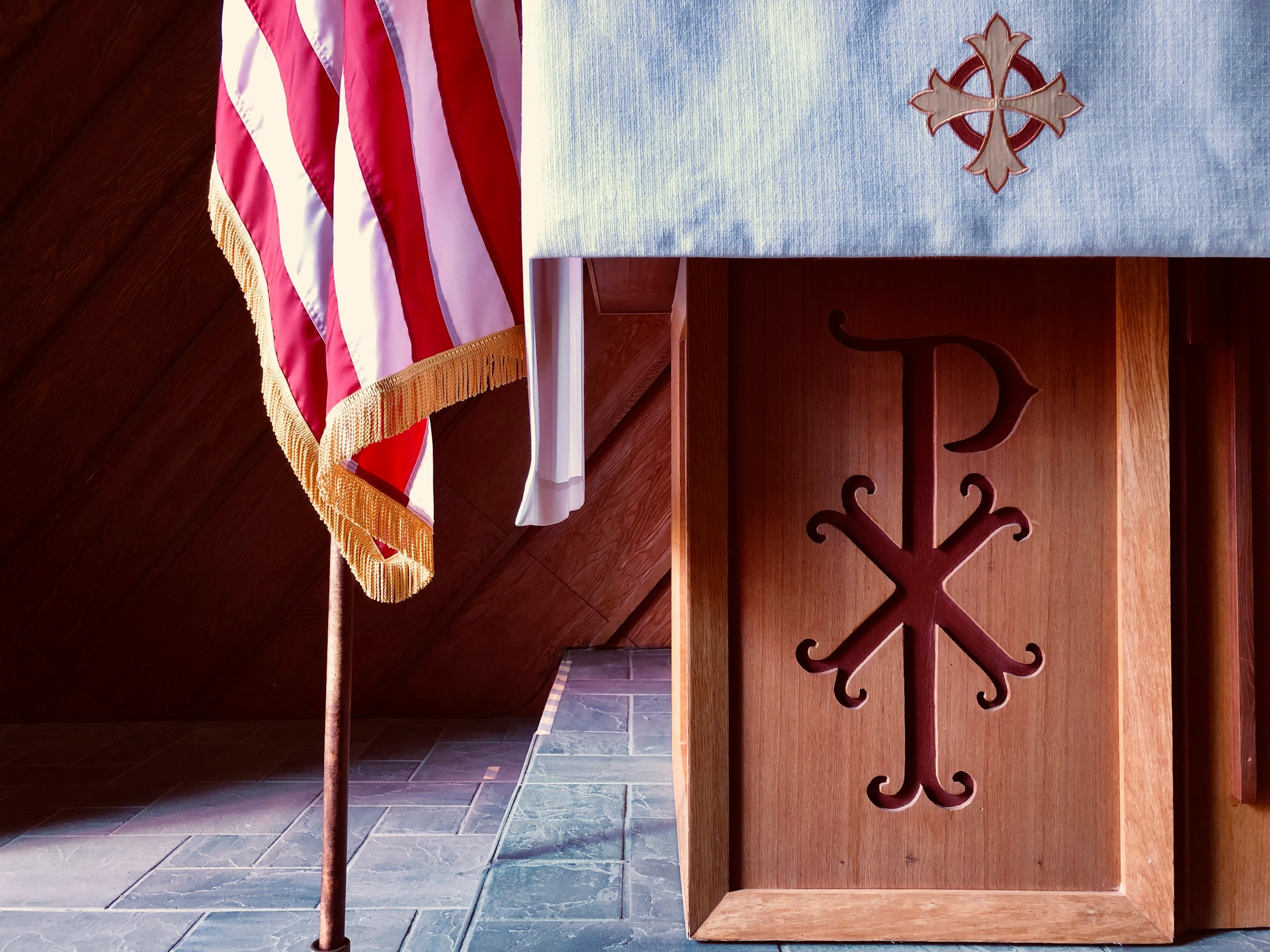
Photo credit: Josh Eckstein. Used under Unsplash license.
 Fr. Tom Pringle